Latest Post
Turtles All the Way Up
That pervasive question, “what are we doing here”, or more accurately, “what’s the fucking point” continues to steal away my attention (and sanity). Looking up is one impetus, but more recently looking inward has reignited my internal debate on our position in the universe and what role we might play on a larger scale.
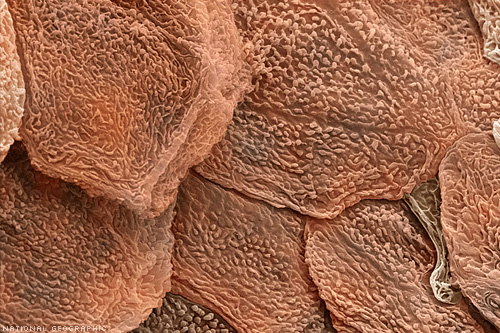
Easily, and without qualification, the human body is the most exquisite machine we have discovered in our universe. Its design (excuse that term’s implications) and function are staggering in their complexity and ingenuity, and what we are capable of through our bodies simply begs for a “bigger picture”. As I look inward, I see that the functional units of the human form present an apt analogy for our own lives. The trillions of cells that comprise my body are not unlike the billions of people that inhabit this planet. The cells of a growing embryo differentiate into specialized cells with specific jobs in the larger organism, just as we might develop and contribute our abilities to a larger society.

For example, red blood cells (erythrocytes) are an oxygen transport army, so specialized, in fact, that they’ve lost their nucleus and are essentially sacs of hemoglobin. As a result, they cannot synthesize their own proteins and are recycled frequently. The skin cells of the epidermis are similarly short-lived, just brushing your arm will cause millions of dead cells to slough off the outermost layer. Neurons, on the other hand, are cellular royalty. Extremely specialized, they detect stimuli and conduct electrical impulses controlling most of the autonomic and voluntary activities of the body, and more importantly they’re responsible for the higher-level functions of the brain.
Every cell plays its own role in the functioning of the larger organism, and some are more important that others. Even so, no single cell is essential for the survival of the organism, and even the regal neuron relies on an array of support cells (that outnumber it by a factor of ten) for its survival.
As one goes further down, the pattern repeats with constituent parts contributing to a larger function or set of properties (within an organ, a single cell, molecules, elements, subatomic particles, etc). What function do we participate in (and what role will I play), what about all those stars and galaxies? Is it “turtles all the way up”?
Archive
-
260.
The Ethics of Practicing Procedures on the Nearly Dead
The report from the field was not promising by any stretch, extensive trauma, and perhaps most importantly unknown “downtime” (referencing the period where the patient received no basic care like...
-
260.
The Ethics of Teaching Hospitals
I can’t imagine what the patient was thinking. Seeing my trembling hands approaching the lacerations on his face with a sharp needle. I tried to reassure him that I knew what I was doing, but the...
-
260.
Conscious Conversation: Behavioral Science
Dr. Eran Zaidel is a professor of Behavioral Neuroscience and faculty member at the Brain Research Institute at UCLA. His work focuses on hemispheric specialization and interhemispheric interaction...
-
260.
Progress Report
Two years down, I’m still going. The next two years are my clinical rotations, the actual hands-on training. It’s a scary prospect, responsibilities and such; but it’s equally exciting, after...
-
260.
Why Medical School Should Be Free
There’s a lot of really great doctors out there, but unfortunately, there’s also some bad ones. That’s a problem we don’t need to have, and I think it’s caused by some problems with the...
-
260.
The Cerebellum: a model for learning in the brain
I know, it’s been a while. Busy is no excuse though, as it is becoming clear that writing for erraticwisdom was an important part of exercising certain parts of my brain that I have neglected...
-
260.
Conscious Conversation: Philosophy
Daniel Black, author of Erectlocution, was kind enough to chat with me one day and we had a great discussion – have a listen.
-
260.
The Stuff in Between
I’m actually almost normal when not agonizing over robot production details, and quite a bit has happened since I last wrote an update. First, I’ve finally graduated. I had a bit of a...